


Curzon supports Rainforest Foundation UK
Curzon Consulting is delighted to provide technical support to Rainforest Foundation UK and its partners in Ghana, DRC, Cameroon, the Republic of Congo and Liberia, in their 3-day virtual workshop: “The role of ForestLink and community-based monitoring in improving forest governance”.
Starting 24 November 2020, the event brings together national and international stakeholders to explore the role of community-based approaches in enhancing the monitoring, protection and governance of forests beyond promoting legality of forest operations.
Find out more about real time monitoring on the Rainforest Foundation UK website.

As part of a Real-time Monitoring project, Rainforest Foundation UK works directly with communities to strengthen monitoring and tackle illegal logging and deforestation.



CONTACT US TO FIND OUT HOW WE CAN HELP

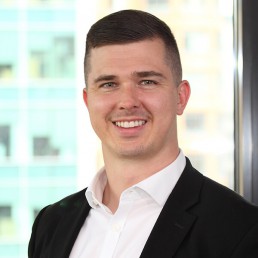
Gregory Stojakovic
Principal
+44 (0)1653 628596
Gregory is a Principal with experience in strategy and operational efficiency projects. His skills include the development and implementation of new business functions, operating model design, governance, data driven decision making, operational efficiency, and digital enablement.
He has worked with multi-national organisations across manufacturing, aerospace and defence, design and engineering consulting, public sector, and FMCG.
CONTACT US TO FIND OUT HOW WE CAN HELP

Amy Palliser
Finance Manager
+44 (0)1653 628596
I lead internal Finance at Curzon Consulting.
I am an ICAEW Chartered Accountant and CIOT Chartered Tax Advisor with over 15 years of experience gained through positions held in both professional practice and industry. I have experience across a wide range of disciplines including financial accounting, Statutory financial audit, business taxation, personal taxation, management accounting, financial direction and control.
I enjoy working as part of a dynamic and innovative team at Curzon Consulting and I have enthusiasm to use my skills and commercial experience to support the firm’s progression.


CONTACT US TO FIND OUT HOW WE CAN HELP
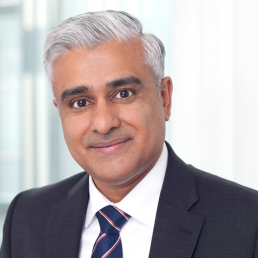
Chetan Trivedi
Partner, Healthcare Lead
Chetan holds over 20 years’ international consulting experience, and leads our Healthcare Practice. For the past 15 years, he has supported healthcare payers, providers, and medical devices companies on strategy, operational improvement, and digital transformation engagements across the UK, wider Europe, Middle East, US, India, and Canada.
He has also delivered value creation programmes for leading private equity firms within and across their healthcare portfolios.
On a personal level, Chetan is deeply passionate about improving health outcomes, safety, and quality of life for patients with Cardiovascular and Chronic Kidney Disease, with a focus on prevention and reversal.
He also has a profound interest in disruptive innovation and its use cases in healthcare. These include Artificial Intelligence, Biologics/Biosimilars, Blockchain, 3D Printing, and Remote Patient Monitoring.
CONTACT US TO FIND OUT HOW WE CAN HELP
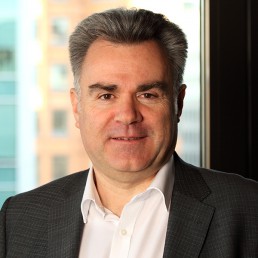
Nigel Brannan
Partner, Infrastructure
Nigel has over 30 years’ consulting experience leading major transformation programmes and strategy assignments. He leads up Curzon Consulting’s infrastructure practice.
In the past 7 years, he has partnered with major utilities, transport, and civil engineering organisations.
At the heart of many of our projects is the design of future-proof operating models to underpin operational and supply chain efficiency, customer growth strategies, and the monetisation of digital innovations.
Nigel’s professional passions lie within the Transport industry having started his career with what was British Rail in the 80s. The industry has experienced phenomenal growth in the past 40 years and has made great leaps given the demands on its infrastructure. Nigel is looking forward to the opportunities brought about by some of the truly transformational programmes in this space over the next 10 years.
CONTACT US TO FIND OUT HOW WE CAN HELP
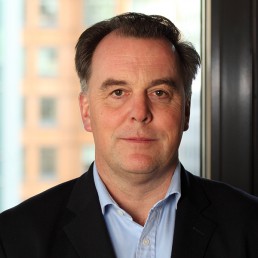
Andrew Morgan
Managing Partner
Andrew has led the evolution of Curzon Consulting since 2003.
During his career, he has directed numerous, large-scale business transformations and growth programmes across a broad range of sectors including Financial Services, Media, Engineering Services, and Utilities. He has a particular specialism in operating model, operational efficiency, profit optimisation, and customer growth.



CONTACT US TO FIND OUT HOW WE CAN HELP

Six Sites, Two Continents, One Coherent Operation: Rationalising a Complex Manufacturing Footprint
Outcomes
The recommended footprint optimisation was accepted in full — structured as a self-funding capital investment with a two-year payback period, removing the need for external capital commitment and making the business case straightforward to approve. The new operations and supply chain configuration directly addressed customers’ requirements for in-country sourcing, protecting existing contracts and unlocking future growth opportunities that the previous setup had put at risk. Implementation was designed around people from the outset — minimising disruption, reducing HR-related risk, and ensuring the retention of the critical capabilities the business depended upon. Key stakeholders across all principal sites were engaged and aligned throughout, giving the new model genuine organisational ownership.
Background
The organisation’s manufacturing and supply chain footprint had evolved organically rather than by design. The result was a web of complex intra-company and external supply chain relationships that drove slow production cycle times, unwieldy planning processes, and a cost base that made competitive pricing increasingly difficult — both for retaining existing customers and winning new ones.
The absence of a clear make-or-buy policy compounded the problem: costly in-house production was being maintained in areas where external sourcing would have delivered better value, while the rationale for what was made where had never been rigorously examined. Meanwhile, an emerging customer requirement for in-country sourcing added a new dimension of urgency — the existing footprint was not just inefficient, it was beginning to create a structural barrier to future contract growth.
The business needed more than a supply chain fix. It needed a fundamental rethink of where it operated, what it made, and how its sites related to one another — one that could be implemented without disrupting the operation or losing the people and capabilities that made it competitive.
Curzon Approach
Curzon applied a comprehensive, fact-based diagnostic across the full breadth of the business — examining product, people, customers, regulation, operations, and supply chain through the Curzon framework. This wide-angle view was essential: footprint decisions of this complexity cannot be made on cost data alone, and understanding the regulatory, commercial, and capability dimensions was as important as the financial analysis.
From this foundation, an options-based operating model was developed to serve as an anchor for scenario evaluation across three primary lenses — providing a structured way to compare meaningfully different futures rather than iterating around a single assumed solution. Each principal scenario was evaluated interactively with key stakeholders from across the business — a deliberate choice to build ownership and test practical feasibility in parallel, rather than presenting conclusions after the fact.
Priority options were then subjected to extensive financial assessment, conducted in close cooperation with the client’s own finance function to ensure the numbers were grounded in the business’s actual cost structure and validated by those who would be held accountable for delivering them. The resulting recommendation balanced profitability, operational resilience, and the commercial imperative of meeting in-country sourcing requirements — structured as a self-funding investment to make implementation as straightforward as possible to sanction.
Throughout, the people dimension was treated as a first-order concern rather than an implementation afterthought — ensuring that the path to a rationalised footprint was one the organisation could walk without losing what made it valuable.