

CIPS Awards Winners
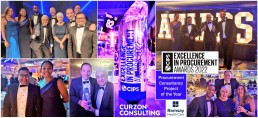
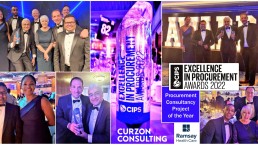
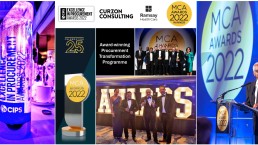
Last night at the CIPS Excellence in Procurement Awards, we won “Best Procurement Consultancy Project of the Year” for our collaboration with Ramsay Health Care UK.
Congratulations to both teams!
Procurement Transformation Programme with Ramsay Health Care UK
As a pandemic response, Ramsay UK embarked on an ambitious growth & efficiency programme. Curzon designed and delivered a substantial cost reduction and Procurement Transformation programme.
Over 9 months, we defined a pragmatic and agile approach to implementing a best-in-class procurement organisation with an increased mandate, able to accelerate benefit delivery, and manage high spend / high complex clinical spend categories.
We helped Ramsay UK to deliver £multi-millions in incremental annualised savings. In addition, the savings have translated into several £100 million worth of shareholder value.
View the full case here – https://www.curzonconsulting.com/procurement-consultancy-project-of-the-year-ramsay-healthcare/



CONTACT US TO FIND OUT HOW WE CAN HELP


Driving market focused resource allocation decisions
The issue
- A business unit of a global speciality chemicals producer supplying catalysts for industrial applications to multiple markets across all geographies
- Capacity constrained and being challenged to improve overall business profitability
- Shared manufacturing assets serving multiple market-facing business units
- Upcoming regulatory changes required product recipe changes with implications on the existing production process
- Limited attempts to address supply constraints in an effective manner, with over-stated demand and poor sales & operations planning disciplines
Solution
- Establish & exploit true production capacity of existing assets:
- Identification and elimination of bottlenecks in supply chain & productions
- Drive for OEE in existing plant (batch size & sequencing, down time & maintenance etc.)
- Identify options to reallocate capacity use to more profitable customers
- Identification of customers & volumes yielding below average contribution allowing for either renegotiation or re-allocation
- Establish cross-market segment view of long-term demand
- Markets & functions created fact base & presented in facilitated cross functional sessions to build cross markets view & build priorities for overall business
- Revamped S&OP including product profitability of prospect pipeline to ensure capacity is utilised for highest financial returns

The results
- CAPEX spend avoidance of £18m with extrapolated implications to the whole division of c. £100m
- Improved joint-management understanding on the levers of capacity & profitability, supported by a cross-market decision making governance process to make data based trade-offs
- Increased production capacity through de-bottlenecking (e.g. batch sequence & maintenance optimisation) with potential resulting contribution uplift of ~ £ 10m p.a.
- 235 tonnes of unlocked capacity through selective elimination of low margin product variants and Sales re-alignment


An award-winning team









CONTACT US TO FIND OUT HOW WE CAN HELP
Framing the requirements for developing a customer-centric approach and service model
The issue
- With a re-focusing of the organization on energy transition and a strategic objective to grow B2C Mobility and Convenience revenue streams, the current, largely B2B, customer care service model was increasingly being asked to meet needs beyond core capabilities and capacity, putting a strain on service and cost to serve
- With limitations on internal capability, business units have chosen to outsource services, leading to a proliferation of suppliers, models and customer experiences
- No cohesive corporate narrative of the customer promise exists and the internal focus was on fixing service failings to reduce the noise within the organisation
- The need for a future-proof operating model that is aligned to the projected steep growth in the B2C customer base was recognized
- Gaining an appreciation of leading external practices in customer care delivery was considered an essential input to framing the right future state operating model
Solution
- Current state assessment of customer care and customer centricity capabilities against a set of standard dimensions to establish current maturity and points of commonality or difference across business groups
- Established current state maturity of each business against an industry reference benchmark
- Developed design criteria to frame a future operating model and as a reference against which to benchmark external leading practices
- Undertook competitor and cross-sector benchmarking to identify areas of Customer Care differentiation, including desktop research, expert input and interviews with Customer leaders within major organisations (both B2B and B2C).
- Defined the priority levers to drive improved customer-centricity and articulated the linkages between the dimensions
- Developed an initial roadmap to outline how the Customer Care capability should evolve
The results
- Mobilised the senior stakeholders to want to move beyond fixing performance failings in Customer Care to evolving a business-wide Customer-centric operating model
- Delivered a customer centric maturity assessment across three representative businesses against a series of capability levers
- Multi-industry, international benchmarking exercise, highlighting customer-centricity maturity and leading practices
- Identification of priority levers to increase customer centricity maturity and approach options to achieve a viable system model
- Development of a roadmap to move beyond operational fixes to a strategically customer centric approach






CONTACT US TO FIND OUT HOW WE CAN HELP

Designing and deciding digital CX route-map & the priority omnichannel service investment to realise it
The issue
-
Having delivered the ‘brilliant basics’ part of a CX transformation programme, the bank needed to define a digital CX design to deliver a signature, differentiating experience
-
A pressure point was that customers’ expectations of doing their banking anywhere/ anytime/on any device were growing, and the ground had been lost on this to digital challenger banks
-
The bank was also in sharp cost control mode so it was critical that digital CX investment choices were well evidenced, validated and focussed
-
We had to answer the question: where and how to prioritise omnichannel service investment to deliver a competitive digital CX?
-
With many competing candidates for digitising customer service across the existing product portfolio, we had to be clear about what omnichannel improvements would realise greatest value from a CX and commercial perspective
What we did
-
Reviewed draft digital strategy and developed investment prioritisation criteria to focus CX and omnichannel service design choices
-
Defined design principles to guide the development of Omnichannel capability
-
Competitor and cross-sector benchmarking to identify key areas of digital CX differentiation
-
Evaluated and ranked CX/service design options against agreed prioritisation criteria and ability to leverage existing IT capability and technology roadmap
-
Flesh-out of to-be CX/service design with benefit cases supporting the investment priorities identified
-
Produced and validated a sequenced digital CX/omnichannel implementation route map

The results
-
Delivered new digital CX/omnichannel design with 10 key touchpoint changes, each with benefits ranging from £3.5M to £9M annually in a fully realised state
-
Pragmatic, phased change route map adopted, which drove early cost savings and new customer acquisition uplift by addressing highest priority CX pain points, allowing subsidisation of next phases
-
80% of the technology capabilities required to deliver the route map were covered by leverage of existing or planned future (and already budgeted) technology assets and upgrades


CONTACT US TO FIND OUT HOW WE CAN HELP

Delivering greater procurement efficiencies for a construction company
The issue
- £1billion division split into 6 semi-autonomous business units, spending £450m per annum on materials and sub-contracted services
- Each business unit under revenue and margin pressure especially those dependant on public sector work
- By re-establishing good procurement practices a modest 3% savings target was agreed upon, the stretch being that the full cash saving had to be delivered in-year
- No single picture of procurement spend or performance compared to the external market
- Procurement & supply chain savings were already baked into business unit budgets and there was pressure from plc to deliver over and above this
Solution
- Created a definitive ‘spend cube’ and with it a single set of numbers
- Completed a top-down and bottom-up analysis of spend at the detailed category/supplier level and agreed impactable spend
- Created and executed a prioritised implementation plan closely monitoring and recording the benefits as they are realised
- Redesigned the P&SC organisation bringing in the necessary skills and expertise as required
The results
- In-year cash savings of £8million with an exit run rate of £10million per annum
- New operating model fully installed and driving benefits (sustainability)
- Benefits fully traceable within business unit P&L
An award-winning team
CONTACT US TO FIND OUT HOW WE CAN HELP

From Market Entry to Measured Exit: Testing and Validating a Solar Aggregator Opportunity
Outcomes
The pilot successfully validated demand, operating economics and funding appetite, including securing in-principle agreement for an initial £50m investment.
Crucially, the testing phase also exposed structural sensitivities within the model. Armed with real-world data, the business made a disciplined decision not to deploy capital until risk-adjusted returns met its investment threshold, preserving capital and avoiding potential downside exposure.
Background
Government-backed feed-in tariffs had created a compelling entry point into solar. On paper, the returns were attractive and funding appetite was strong.
However, entering the market required building an entirely new operating model, spanning customer acquisition, installation, asset financing and long-term performance management. The economics depended on tight conversion rates, lender alignment and seamless supply chain coordination.
Before committing significant capital, the business needed to determine whether the opportunity was genuinely scalable, financeable and resilient to downside risk.
Curzon Approach
-
Designed the end-to-end operating model, mapping the full solar value chain, from customer acquisition to installation and asset management and identifying the most scalable aggregator structure.
-
Built and activated the supply chain, selecting and negotiating with installers, equipment providers, and delivery partners to establish competitive commercial terms.
-
Executed a live market pilot, launching a three-month programme to test real customer demand, conversion economics, operational capability and financial viability.
-
Structured the funding model, identifying and engaging capital partners to support asset financing and long-term balance sheet development.
-
Developed a forward roadmap, positioning Solar PV as a platform for broader micro-generation and renewable energy expansion.
CASE STUDIES
Read some of the client problems we have solved!

Increasing patient satisfaction through orthopaedic Enhanced Recovery Programme
Curzon Consulting case study: Enhanced recovery programme to improve patient satisfaction
Reducing 30 day re-admissions by leveraging patient remote monitoring solution
Reducing 30-Day Re-admissions by Leveraging Patient Remote Monitoring Solution

Leveraging procurement to increase profitability of orthopaedic services
We helped a major private hospital group deliver 22% in annualised savings through volume leverage and brand/system standardisation, which also allowed them to leverage a lower cost base to win more NHS and PMI work

Evaluating structural entity options for a new arm of government transport body
Curzon Consulting case study: growing revenue and capturing a greater share of the general aviation value chain


Performance turnaround at global construction product manufacturing group
Curzon Consulting case study: Performance turnaround at global construction product manufacturing group
Increasing patient satisfaction through orthopaedic Enhanced Recovery Programme
Curzon Consulting case study: Enhanced recovery programme to improve patient satisfaction
Reducing 30 day re-admissions by leveraging patient remote monitoring solution
Reducing 30-Day Re-admissions by Leveraging Patient Remote Monitoring Solution
Leveraging procurement to increase profitability of orthopaedic services
We helped a major private hospital group deliver 22% in annualised savings through volume leverage and brand/system standardisation, which also allowed them to leverage a lower cost base to win more NHS and PMI work
Evaluating structural entity options for a new arm of government transport body
Curzon Consulting case study: growing revenue and capturing a greater share of the general aviation value chain
Performance turnaround at global construction product manufacturing group
Curzon Consulting case study: Performance turnaround at global construction product manufacturing group
Increasing patient satisfaction through orthopaedic Enhanced Recovery Programme
Curzon Consulting case study: Enhanced recovery programme to improve patient satisfaction
Reducing 30 day re-admissions by leveraging patient remote monitoring solution
Reducing 30-Day Re-admissions by Leveraging Patient Remote Monitoring Solution
Leveraging procurement to increase profitability of orthopaedic services
We helped a major private hospital group deliver 22% in annualised savings through volume leverage and brand/system standardisation, which also allowed them to leverage a lower cost base to win more NHS and PMI work
Evaluating structural entity options for a new arm of government transport body
Curzon Consulting case study: growing revenue and capturing a greater share of the general aviation value chain
Performance turnaround at global construction product manufacturing group
Curzon Consulting case study: Performance turnaround at global construction product manufacturing group

Operational excellence at a key site for a marine engineering products division of a global organisation
The issue
- An engineering, fabrication & assembly facility supplying deck machinery equipment to the marine industry, was severely underinvested in, with old facilities & equipment and remote from Group HQ
- Seen as a failing site with internal customers losing trust in its ability to deliver
- Disconnected planning and production functions causing late delivery and high costs
- No effective performance management system in place to drive improvements
- Very high inventories due to a lack of control of demand and production priorities
- Intention to transfer products in from Scandinavia and establish a low-cost supply centre of excellence
Solution
- Evaluation of the primary issues and development of a site transformation plan
- Focused on OTIF as the critical performance metric; established cross-functional planning with short interval control to manage demand and delivery to promise
- Improved data integrity, reset planning parameters and re-established ERP system use
- Re-organised operations to improve flow through the factory and to establish schedule adherence
- Implemented practical lean operational disciplines centred around PDCA
- Addressed excess inventory, control of stock, kitting and warehousing operations
- Established effective performance management across all functions
- Coached management to develop capability and establish sustainable improvement

The results
- Delivery performance improvement OTIF from 14% to 95% within six months
- 45% reduction of inventories within one year
- Jump in recovered factory revenues from effective demand management & increased delivery to commitments
- Engaged and productive workforce with a clear understanding of what was required of them
- Successful capital upgrade completed while continuing to supply
- Site was established as a Centre of Excellence for deck machinery and achieved Group award for excellence
- Asked to repeat a similar exercise at another site in the Far East
An award-winning team
CONTACT US TO FIND OUT HOW WE CAN HELP

Hip & knee implant manufacturers – The value creation opportunity
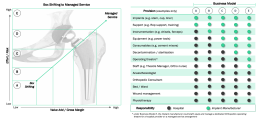
If hip and knee implant manufacturers want to stay relevant, and “move the needle” on value creation, they need to play big or go home!
An aging (ageing) population is driving absolute sales, but over the past few years, primary hip and knee procedures have become commoditised, which has resulted in margins being squeezed for both hospital providers and implant manufacturers.
Implant manufacturers have an opportunity to transform their business model, away from traditional “box shifting” product selling (driven by monthly sales targets) to a high value add, high margin managed service proposition, where multi-year partnerships are formed with hospital providers. Implant manufacturers need to provide additional services along the value chain, especially as health systems move towards value-based care models.
The Value Creation Opportunity
About the author



CONTACT US TO FIND OUT HOW WE CAN HELP

Delivering business turnaround
The issue
- The UK business of a global construction materials manufacturer had been losing money for several years due to inefficient operations and declining sales in an industry sector experiencing extremely challenging times.
- A full business review and improvement plan were required to stabilise the business and address the financial performance.
- Significant cost reduction efforts had already been made to offset the declining sales and lower margins, but the business was continuing to lose money.
- Sales lacked the basic tools and capabilities to compete effectively and operations were poorly managed resulting in over-production, an inefficient organisation and poor working practices.
- The leadership team was highly dysfunctional and lacked the capability to define and execute a plan to address the situation.
Solution
- Undertook a full situational analysis of the business operations and identified changes required to reverse the performance trend
- A comprehensive change programme was designed and implemented with the full involvement of the business management team
- Recognising that the current actions were primarily to address the initial objective of eliminating the business losses, a parallel stream of work focused on the market and development of the future strategy for the business
- This dovetailed with the reorganisation of the commercial functions and outlined the business’s future journey to go beyond a break-even situation and achieve acceptable returns

The results
- The programme had a significant impact on the business across all areas of the value chain and delivered a sustainable bottom-line improvement of over £5m p.a in 12 months.
- In addition to the delivered cost optimisation actions the re-focusing and capability development work with the sales team secured a contract renewal with three principal customers and the acquisition of a new major account and stemmed the loss of any further business.
- The new ways of working that focus on using sound management information to run the business and to action issues have taken root across the organisation. Decision making improved and continuous improvement is becoming established.
- The Group Executive sees the step change in performance that was achieved in the timeframe as the most successful intervention of its kind across the portfolio in recent years.
An award-winning team
CONTACT US TO FIND OUT HOW WE CAN HELP

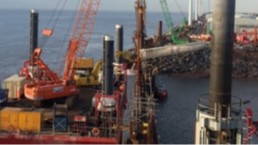
Applying lean principles to a deliver a step change in performance in a construction environment
The issue
- Over a year behind plan due to technical difficulties and the inability to establish an effective delivery model
- Significant efforts were made to find a workable engineering solution but continuing to fail in meeting planned delivery cycle times
- Accruing significant non-recoverable costs on extending leases of expensive marine engineering plant
- Accepted reality that most delays were either due to weather or one-off events and therefore non-addressable
- Reliant on experienced agents, managers and foremen to manage communication without the need for much structure or formality
- The aim was to achieve a repeatable 14-day ‘production’ cycle, from a starting point of 19 days as the demonstrated best achievement
Solution
Working with the project team to identify and implement:
- An optimal production process with defined task times against which the project could plan, execute and measure performance
- Introduction of cross-functional short-range planning discipline to improve visibility and reduce the instances of unplanned stoppages through poor communication and lack of coordination
- Strengthening the cascade communications to the front-line teams to ensure the right plan was being executed
- Prioritisation of the process improvement pipeline to accelerate the implementation of the highest impact solutions
- Establishing adherence to a standard process and course-correcting back to the agreed sequence if unplanned events caused the deviation
- Previously each cycle had effectively been ‘bespoke’
- Using close monitoring to highlight avoidable downtime and to identify operational fixes, e.g deck layout standardisation
The results
-
Cycle time was compressed to less than the on-target 14-day sequence on a sustained basis, and as low as 10 days, with associated cost savings of ~£0.5m per cycle.
Having the Curzon team ‘embedded’ within the project proved effective in understanding the complexities and challenges of the operating environment. Pragmatic and tailored interventions and a ‘test and learn’ approach encouraged adoption and ownership.
An award-winning team