


Beyond Core Contracting: Building High-Margin, Data-Led Service Propositions for a Major Infrastructure Services Provider
Outcomes
- Three validated, margin-enhancing propositions developed and refined from a wide longlist — each assessed against margin potential, readiness, scalability, and time to revenue, and confirmed as in-demand with water utility clients
- Full commercial toolkit delivered, ready for immediate business development use: proposition packs, sales collateral deck, playbooks, roadmaps, and stakeholder maps across target utilities
- 35 senior stakeholder interviews conducted across four major UK water companies, generating direct insight into client pain points and what they value from the client as a delivery partner
- Comprehensive stakeholder maps produced identifying budget holders and decision-makers across target utilities
- Client gained a materially improved understanding of how water utilities actually perceive its capabilities — a significant blind spot prior to the engagement
Background
UK water companies are facing unprecedented operational and financial pressure in AMP8. Regulator scrutiny and penalties are rising, Total Cost of Operations is under the microscope, and a historic industry focus on large capital schemes has left gaps in maintenance and operational delivery that utilities are increasingly looking to address. The client recognised that its existing model — operationally strong but largely transactional — left significant margin on the table and exposed it to commoditisation. It needed to identify which adjacent, data-led opportunities were genuinely in demand, commercially viable, and within reach — and to build the capability to pursue them.
Curzon Approach
Curzon partnered with the client across four workstreams to take the engagement from market insight to commercial-ready propositions:
Market Intelligence and Client Insight — We conducted 35 interviews with senior stakeholders across Anglian, Thames, Southern, and Yorkshire Water to map client pain points, identify opportunity spaces, and understand how the client was genuinely perceived by its customers. AI tools were used to accelerate insight generation — summarising transcripts, clustering themes, and extracting recurring client needs at pace. Competitor offerings and regulatory positions were assessed to sharpen opportunity prioritisation.
Opportunity Identification and Validation — A structured scan of core-adjacent opportunities was conducted, with propositions assessed against four criteria: margin potential, readiness, scalability, and time to revenue. A wide longlist was refined to three high-impact, client-ready propositions aligned to AMP8 priorities.
Co-creation and Proposition Development — Joint Curzon-client workshops brought internal stakeholders together across divisions to stress-test and shape commercially viable propositions. Co-creation built internal ownership and accelerated validation — ensuring the final propositions reflected both client demand and the client’s genuine delivery capability.
Commercial Enablement and Playbook Delivery — Each proposition was supported by a full commercial toolkit: a proposition pack setting out the what, how, and why; a playbook translating proposition into route to market; a roadmap illustrating the path to commercial delivery; and a stakeholder map identifying the right decision-makers and budget holders at each target utility. A consolidated sales collateral deck was produced to support business development conversations and sharpen market positioning.
CASE STUDIES
Read some of the client problems we have solved!






Defining What a Resilient Airport Looks Like — and Building the Framework to Get There
Outcomes
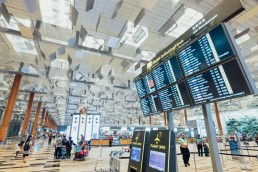
- Delivered a clear, shared definition of resilience across a complex, multi-stakeholder airport ecosystem — replacing fragmented and conflicting interpretations held across operations, investment, and planning functions
- Produced a structured resilience assessment framework to evaluate future masterplan options against objective criteria
- Identified specific priority improvement areas: horizontal risk management, clearer resilience appetite, stronger end-to-end operational thinking, and better alignment between capacity, cost, and service outcomes
- Established a set of resilience factors — including robustness, reliability, redundancy, and incident command — to stress-test future infrastructure investment decisions
- Provided the client with a practical basis for turning difficult operational flow days into good ones, with clear requirements for what airport users and partners need to deliver resilient outcomes consistently
Background
Earlier diagnostic work had revealed a fundamental problem: resilience meant different things to different parts of the organisation. For some, it meant punctuality. For others, recovery speed, capacity headroom, customer experience, or brand protection. Without a shared definition, investment decisions, operational planning, and expansion masterplanning were being made against inconsistent standards. The client needed a single, coherent view of what resilience meant in practice — and what it would take to deliver it reliably, particularly during periods of operational stress or disruption.
Curzon Approach
Curzon combined three workstreams to develop a grounded, practical resilience framework:
- Stakeholder Engagement and Diagnostic — We conducted senior stakeholder interviews across the airport ecosystem to surface the range of resilience definitions in use and understand where gaps, conflicts, and dependencies lay. This was combined with a current-state assessment of the airport’s resilience position against objective criteria.
- Resilience Definition and Framework Design — We synthesised the multiple definitions into a single, practical resilience framework tailored to the airport context. This included defining resilience factors — robustness, reliability, redundancy, and incident command — that could be applied consistently across operational, organisational, infrastructure, and technology dimensions.
- Workshops and Masterplan Translation — We ran a structured AWG12 resilience workshop with the client and its ecosystem partners to identify what would need to be true operationally, organisationally, and technologically to turn difficult flow days into good ones. These insights were then translated into resilience outcomes and requirements to inform and stress-test future masterplan options.
- Existing strengths — including the Airport Operations Centre (APOC), leadership commitment, and rapid organisational learning — were identified and built upon, rather than overlooked in pursuit of a purely new model.
CASE STUDIES
Read some of the client problems we have solved!

From Business Case to Operating Business Unit: Insourcing Low-Complexity Capital Delivery and Delivering £20m+ in Savings
Outcomes
- Conservative net benefit of £20m+ over AMP8 (5 years), based on a 20% cost saving versus outsourced costs on £193m of capital spend, against a total internal team cost of ~£5m p.a.
- Existing pilot team of 5 engineers had already delivered brownfield work at 40% lower cost than external providers — proving the model before full rollout
- Full new business unit stood up from scratch: strategy, vision, innovation-centric operating model and organisation structure, recruitment, and governance all designed and implemented by Curzon
- 10% increase in job delivery on a like-for-like basis within three months of the team being established
- Zero reportable incidents and zero accidents in the period following launch, with a structured safety scoring system embedded across the supply chain (average supplier safety score: 3.5/5, with no suppliers scoring below 3)
- Innovation-engine enabled robust ideas-to-actions
- Phased recruitment programme initiated across 30+ roles across Delivery, Enablement, and Health & Safety functions
- Pain share from external provider underperformance had reached £14m and was rising prior to insourcing — with out-of-service equipment averaging 181 days to return versus a 30-day expectation
Background
48% of externally delivered work parcels were being completed late. Pain share from missed deadlines had reached £14m and was rising. Equipment taken out of service was taking an average of 181 days to return — against an expectation of 30 days. Safety reporting was fragmented and not embedded in management information. Meanwhile, a small internal team of just 5 engineers had quietly demonstrated it could deliver low-complexity brownfield work faster and at 40% lower cost than external partners. The client needed a rigorous business case to scale this model — and then a partner to build and run the new business unit from the ground up.
Curzon Approach
Curzon’s engagement ran in two stages: building the case for change, then designing and implementing the new business unit end-to-end.
Stage 1: Business Case and Target Operating Model
We collected performance data from the existing internal team across 20 projects to validate the insourcing concept, then extended the analysis across all capital delivery in the business to size the full AMP8 opportunity. Working with the Asset Development Planning team, we built a benefits case calculating net savings of at least £20m and designed a full Target Operating Model covering people, processes, and systems. The case secured enthusiastic senior sign-off.
Stage 2: Implementation — Building the Business Unit
Following approval, Curzon led the full implementation of the new delivery function across five workstreams:
Strategy and Vision — We defined the vision, mission, and cultural framework for the new team, grounding it in the client’s wider Water Supply strategy. Core values of trust, transparency, collaboration, and continuous improvement were embedded from the outset, with a communications plan to bring the full team on the journey through monthly town halls and structured engagement.
Organisation Design and Recruitment — We finalised the new organisational structure across three functions: Delivery, Enablement/Innovation (innovation and continuous improvement, programme management, cost, procurement, and framework management), and Health & Safety. A phased, top-down recruitment programme was initiated across 30+ roles, with managers empowered to shape their own teams. Key roles were filled immediately through acting-up arrangements to maintain delivery momentum.
Process and RACI Design — End-to-end delivery processes were redesigned for the new structure, with clear ownership at every step. This eliminated duplicated hand-offs, reduced lag time, accelerated site mobilisation, and strengthened data quality to enable smarter future programme prioritisation.
Safety — Safety was built into the operating model as a core management discipline, not a compliance afterthought. Curzon ran a safety day with the supply chain, establishing shared standards and expectations across all partners. Incident reporting — including near-misses, CSIRs (Construction Site Inspection Reports), and supplier safety scores — was brought into the core management information dashboard alongside performance and team data, creating a single view of operational health for leadership.
Programme Management and Governance — A Microsoft Projects-based programme was implemented at both programme and job level, with new data logic to drive deliverability and prioritisation. Transition KPIs, a new meeting cadence, and an Enablement Team dedicated to continuous improvement were established to sustain performance beyond Curzon’s direct involvement.
CASE STUDIES
Read some of the client problems we have solved!

Building Capability and Confidence in a Struggling Water Company: £100m+ in Cashable Benefits Unlocked
Outcomes
- Business cases constructed and signed off to deliver over £100m in tangible, cashable benefits and £300m in Totex benefits across AMP7
- Significant ODI risk mitigated through an integrated, customer-centric improvement portfolio
- 14 senior leaders upskilled with tools and techniques to operate more strategically
- Replaced fragmented, siloed operations with a single coordinated version of the truth and aligned priorities
- Robust governance and performance management toolkit embedded and owned internally — without standing up a traditional PMO
Background
The client recognised it needed to do something fundamentally different. Existing programme portfolios were riddled with gaps, duplications, and untenable dependencies. Benefits were not being tracked or realised. Senior “Heads of” were consumed by day-to-day firefighting. The organisation had tried external-led change programmes before without lasting results, creating scepticism about consultants and conventional PMO approaches. The ask was not to run another project — it was to build the internal capability and belief to deliver sustained improvement through AMP7.
Curzon Approach
Curzon was engaged over 12 months to skill up and coach senior Heads of and their directors, then provided ongoing support into early AMP7. Critically, we consciously avoided setting up a traditional PMO. Our team was fully integrated into the client’s management structure — badged as part of their team from the outset — to build ownership and embed capability that would last beyond the engagement.
Our approach covered four areas:
- Portfolio Rationalisation — We collated and reviewed existing programme portfolios, surfacing gaps, duplications, untenable dependencies, and constraints. Owners and key interfaces were systematically challenged to address issues through a robust, visible risk management process.
- Prioritisation and Alignment — Transformation mapping tools were used to visualise areas of conflict and get senior management aligned around a common set of priorities. Owners were enabled to rebuild and sign off on a believable, deliverable plan.
- Governance and Controls — We provided a toolkit to build and manage portfolios effectively, including leadership governance, control frameworks, maturity goals, benefits tracking, new initiative generation, and a coordinated transformation roadmap.
- Coaching and Capability Building — Senior leaders were coached individually and collectively, equipping them with both the operational tools to be more effective and the strategic headroom to think beyond the immediate. Cross-sector expertise from manufacturing and transportation was brought in to develop new approaches, and emerging considerations such as Net Zero Carbon were integrated into decision-making.
CASE STUDIES
Read some of the client problems we have solved!

From Regulatory Pressure to Top-Quartile Performance: Strategic Transformation of a Major UK Water Company Ahead of AMP7
Outcomes
- £7.5m in total expenditure savings delivered through refined support processes during early implementation
- ODI reward payment ranked third highest in the industry in AMP7 Year 1, driven significantly by pathfinder investments made during the engagement
- Board-level agreement secured on a new asset management operating model
- New leaders across all price control business areas took ownership of implementation plans, with governance and assurance structures in place to deliver
Background
Approaching AMP7, the client needed to fundamentally reshape its operating model. Key pressures included: new ODI in-period performance requirements; the need to drive low and no-build solutions at scale in a Totex environment; and misaligned commercial incentives across Delivery Alliances and the wider supply chain. The organisation also lacked a shared understanding of what the new operating model needed to look like and what it would take to deliver it — in terms of people, process, and structure.
Curzon Approach
Curzon served as strategic development and transformation partner across a three-year engagement leading into AMP7 and continued post-settlement. Our approach had four components:
- Regulatory Grounding — We built deep understanding of regulatory methodology as the foundation for all solutions, ensuring every recommendation balanced the needs of regulators, customers, and shareholders.
- Operating Model Design — We created clarity and shared understanding of the new model’s objectives, identifying the required changes across people, process, and structure, and aligning these with functional strategies. Design was iterative and collaborative, involving 1-1 sessions and workshops across the organisation, with senior management providing governance.
- Leadership Pairing — New leaders for each price control business area were paired with experienced Curzon consultants in twice-weekly intensive working sessions over approximately six months. This developed their future role descriptions, organisational structures, and implementation plans — building genuine ownership from the outset.
- Pathfinder Investments — We identified and invested in key pathfinder areas to evaluate transformational options. Developer Services was a flagship example: digital technologies and process redesign transformed a reactive, combative function into a proactive, collaborative one with full integration across internal customer functions. Pathfinder learnings also informed improvements to needs management, Totex decision-making, alliance involvement in asset programming, and data and information management. These pathfinders made a significant contribution to the top-quartile ODI performance achieved in AMP7 Year 1.
A new commercial and incentivisation model was developed from the ground up — one designed not just to incentivise what people did, but how they did it.
CASE STUDIES
Read some of the client problems we have solved!
From £18m in Penalties to Zero: Turning Around Interruptions to Supply Performance for a Major UK Water Company
Outcomes
- Regulatory penalties had escalated from £6.3m in AMP7 Year 1 to £17.8m in Year 3 (equating to £19k per second over a 3-hour repair window)
- Established a 10% year-on-year performance improvement trajectory with a clear plan to reduce £18m of annual penalties to zero within three years
- Client was able to articulate its transformation journey credibly to regulators, investors, and executive leadership
- Restored public confidence, reflected in improved CMEX scores
Background
Prolonged drought conditions caused a spike in pipe bursts, pushing I2S performance into a steep decline. Penalties escalated rapidly. The regulator tracked and published performance data publicly, compounding reputational damage alongside financial loss.
The root causes ran deep: local knowledge was held in individuals rather than systems; telemetry was poorly deployed with no central data lake or predictive capability; 75% of interruption events and 80% of ODI penalties originated in just four urban areas, yet resources were spread evenly across three regions. The organisation had no defined “to be” event management process, no post-event learning mechanism, and change initiatives were repeatedly stalled by bureaucratic governance. Decision-makers at the centre lacked access to critical real-time information.
Curzon Approach
Curzon conducted a deep-dive analysis of the highest-impact interruption events, identifying performance patterns and trends at partner, regional, and national level. A cultural study diagnosed why performance improvement initiatives consistently failed to take hold.
We then:
- Designed a root cause analysis framework and learning cycle, including workshop formats and an action tracking system
- Defined a stretching vision for I2S performance running into the next regulatory period
- Built an aligned transformation programme plan, enabling the Water directorate to focus resources coherently
- Established traffic light performance dashboards to drive continuous improvement
- Aligned partners and suppliers around a commonly understood set of service levels
- Stood up a central change programme management office with trained, dedicated resource and a coherent tracking mechanism
CASE STUDIES
Read some of the client problems we have solved!
Transforming a Major UK Water Company's Operating Model Ahead of AMP7
Outcomes
- Delivered a new operating model aligning the business with its supply chain and alliance model ahead of the AMP7 regulatory period
- Established clear ownership of Outcome Delivery Incentives (ODIs) and regulatory compliance requirements across new Horizontal structures
- Enabled a strategic infrastructure development programme supporting a 3,500-property development site with sustainable drainage and water reuse solutions
- Developer Services transformation digitised the full application and planning process, eliminating process inefficiency and improving customer satisfaction scores — key metrics tied to regulatory incentives and penalties
- Upskilled client teams across programme management, change management, risk management, and project controls through direct coaching and capability interventions
Background
The client faced two interconnected challenges. First, the upcoming AMP7 regulatory period required a fundamentally different operating model — one that broke down existing silos across asset Programming, Change, and Operations, and created clear accountability for regulatory outcomes. Second, Developer Services was underperforming against service level and customer satisfaction targets, with regulatory incentives and penalties directly at stake. Capital expenditure efficiency was also sub-optimal. The client needed both a strategic operating model redesign and a targeted functional transformation — simultaneously.
Curzon Approach
Curzon delivered the engagement across three workstreams:
- Operating Model Design — We designed a new model built on four strategic pillars: Asset & Operations, Digital, Customer, and People. Existing silos were dismantled and replaced with “Horizontal” asset groups, each with a single point of accountability. “Vertical” functions (Finance & Performance, Strategy & Risk) were integrated with defined interfaces. Governance, decision-making, organisation structure, roles, performance management, and incentive mechanisms were all redesigned around six objectives: Customer, Carbon, Colleague, Corporate, Community, and Compliance.
- Capability Development — We identified new skillsets required (including no-build solution design, asset data science, and whole-lifetime benefit tracking) and ran a gap analysis of Enterprise Information Management. Curzon directly coached client resources and ran targeted capability interventions to accelerate readiness.
- Developer Services Transformation — Working closely with the client’s strategic planning and regulation team, Curzon built and maintained the digital business case, led end-to-end business process reengineering, and designed and delivered a ground-breaking geospatial site mapping solution. This fully digitised the application, planning, and asset delivery process with automated workflow management. A change readiness assessment underpinned a structured change management strategy, including a trained community of change agents to sustain adoption.
CASE STUDIES
Read some of the client problems we have solved!
Validation the Target Operating Model of the Infrastructure Manager for the New High-Speed rail network
Outcomes
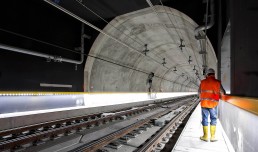
The independent validation produced 56 structured recommendations, organised around the thematic areas identified during assessment. Every recommendation was approved and adopted by the client’s Steering Group, a strong endorsement of both the rigour of the process and the quality of the findings. Subsequent validation cycles were scheduled to provide ongoing assurance as the operating model continued to mature. The client described the project as a resounding success, with many recommendations already implemented.
Background
Developing the operating model for an entirely new railway, one with no legacy infrastructure, no inherited workforce culture, and no existing operational baseline, is a unique and complex undertaking. Over three years, the client had shaped a Target Operating Model outlining the full capability requirements for the Infrastructure Manager role. Given the scale of the programme and the public scrutiny it attracts, internal confidence in the model was not sufficient on its own. An independent, expert challenge was needed to stress-test the TOM, identify gaps or areas requiring acceleration, and chart a path for ongoing validation as the programme progressed.
Curzon Approach
Curzon deployed a red team methodology, drawing on the experience of senior executives from across multiple sectors to conduct a thorough and targeted review of the TOM and all its underpinning artefacts. This cross-sector perspective was deliberate: bringing in thinking from outside the rail industry allowed the team to surface alternative approaches and fresh insights that a purely sector-specific review would not have generated.
A series of immersive workshops and structured engagements with the client’s own subject matter experts shaped a clear set of thematic areas for the assessment to focus on. These themes formed the backbone of our recommendations, ensuring the outputs were coherent and actionable rather than a disconnected list of observations.
Throughout the process, cross-sector benchmarks were used to enrich the findings, giving the client both a clear picture of where the TOM stood relative to best practice and practical reference points for addressing the recommendations identified.
CASE STUDIES
Read some of the client problems we have solved!

Maximizing The Profit From A Traditional R&D Research Facility At Technology Research Company
Outcomes
A strategic growth programme identified £6.2m in additional operating profit potential and a clear path to achieving the client’s 20% Return on Sales target, with recommendations to restructure the operating model, unlock underperforming R&D capacity, and separate the product and R&D businesses for sharper commercial focus.
Background
Under previous ownership, the business had been run as an R&D cost centre, a model ill-suited to the commercial ambitions of its new owners. Revenue and profit had stagnated, and the business was falling behind competitors who had grown significantly in the same period.
The product division lacked the delivery experience and processes needed to bring new products to market efficiently. Investment decisions were driven by technological interest rather than market demand, and there was no coherent go-to-market strategy. Meanwhile, the R&D business was chronically underutilised; billable resource utilisation sat at around 50%, compounded by weak key account management and fragmented sales activity across the organisation.
Curzon Approach
Curzon began with a thorough diagnostic phase, examining resourcing, sales strategy, investment processes, and decision-making authority across the business. This gave us an evidence-based view of where performance was being lost and where growth was being left on the table.
We stress-tested existing assumptions about the business’s opportunities, combining internal findings with extensive market research to identify credible growth vectors aligned to the client’s existing capabilities, across a range of defence and technology market verticals.
On the operational side, we mapped value streams across the business to identify where the operating model could be simplified and made more effective. We developed a full business case quantifying the impact of different growth levers, giving leadership a clear picture of the prize available.
Our recommendations included separating the R&D and product businesses to allow each to operate with the right commercial model, right-sizing support functions, and introducing the account management and sales discipline needed to drive sustainable revenue growth.
CASE STUDIES
Read some of the client problems we have solved!


Driving Market Focused Resource Allocation Decisions Across Functions
Outcomes
- CAPEX spend avoidance of £18m with extrapolated implications to the whole division of c.£100m
- Improved join-management understanding of the levers of capacity and profitability, supported by a cross-market decision making governance process to make data-based trade-offs
- Increased production capacity through de-bottlenecking with resulting potential contribution uplift of £10m p/a
- 235 tonnes of unlocked capacity through selective elimination of low margin product variants and sales realignment
Background
- A division of a leading speciality chemicals company offering high-performance products and technologies to the chemical industry
- Perception that demand was constrained by supply capacity
- Curzon was asked to help the business to identify and agree the priorities for increased top and bottom-line performance
- Highly siloed organisation with poor relationships between Commercial, Supply Chain, Operations and R&D. Little trust all round
- A ‘who shouts loudest’ approach to dealing with supply constraints
- Lacking and/or no visibility of key business information; market potential, product costing, R&D plans, regulatory landscape etc.
- Unable to drive a management process to align and move forward
Curzon Approach
- Alignment of the functional leaders around a structured approach to reach an informed decision on priorities
- Collation, research, analysis and presentation of the relevant market, customer, production, product development, regulatory and financial information needed for a meaningful management discussion
- Facilitated sessions to review the available information, share insights and question assumptions
- Full cross-functional participation in a management event to arrive at an agreed business decision based on the facts
- Development of a cross-business implementation plan and an appropriate governance process to maintain a joined-up approach
- Codifying the methodology for re-use with other businesses