


AI Can Make Us More Productive. Can It Make Us More Capable?
As AI changes how work is done, it also changes how people develop expertise. Suzanne Coles, Partner at Curzon Consulting, explores how leaders can turn individual productivity gains into stronger judgement, collective learning and organisational capability.
As AI takes on more work traditionally performed by people, organisations face a question beyond productivity: how will they develop the judgement, experience and relationships on which future performance depends?
We tend to assess AI through the activities it can remove: research, analysis, drafting and increasingly complex professional tasks. The immediate benefits can be compelling. But these activities have also provided experiences through which people learn to assess evidence, recognise exceptions and defend conclusions.
An organisation may produce better work today without necessarily becoming better equipped to make decisions tomorrow.
In the first article in this series, I explored why improvements at the point of AI intervention can obscure their wider impact on business performance. Here, I want to examine whether individual productivity gains translate into stronger collective capability and a more adaptive organisation.
A better output does not necessarily mean greater understanding
My experience of developing AI strategy, executive diagnostics and sector-specific materials has demonstrated how effectively AI can accelerate research, structure information and generate alternative approaches.
I have found it particularly valuable for challenging reasoning, exploring alternatives and identifying gaps in an argument.
But a sophisticated output does not necessarily demonstrate understanding. A well-structured recommendation tells us little about whether its author recognises its limitations or understands the consequences of acting upon it.
Removing mechanical information gathering may release valuable time. Removing opportunities to evaluate conflicting evidence, discuss findings and receive feedback may have different consequences.
The implications extend beyond individuals. AI could help teams examine competing interpretations and combine expertise. Equally, it could encourage colleagues to rely on similar AI-generated conclusions, leaving fewer assumptions challenged.
The question is what organisations do with the time and information AI makes available.

How do people and organisations learn?
My work in life sciences and my interest in neuroscience have shaped how I think about the ways people and organisations learn, adapt and develop new capabilities.
Neuroplasticity describes the brain’s capacity to change through experience, learning and repeated activity. Neural connections strengthen or weaken, and functional networks can reorganise throughout life. Learning involves more than acquiring information: it also requires developing and reinforcing new patterns of thinking and responding.[1]
I see an interesting parallel in how organisations learn and transform. People and teams develop familiar ways of working, making decisions and interacting. Some patterns remain effective; others persist long after they have ceased to serve the organisation well.
Just as learning requires more than exposure to new information, organisational transformation requires more than introducing new technology. Both depend on experience, feedback and reinforcing new ways of thinking and behaving.
This is an analogy, not a biological equivalence. But it raises an important question: are we simply accelerating established ways of working, or using AI to develop genuinely new capabilities?
Learning together: a lesson from post-merger integration
I encountered this challenge during a major acquisition and post-merger integration programme within a global industrial technology organisation.
The organisation brought together businesses with different products, technologies, customer requirements and operating practices. Each had developed expertise suited to its particular markets.
As we examined opportunities for integration and operational improvement, activities that appeared comparable at corporate level could be fundamentally different in practice.
Experienced engineers and operational leaders understood why processes had developed, which exceptions mattered and how functions needed to collaborate.
But integration required more than preserving individual expertise.
People across the businesses needed to understand one another’s operating environments, challenge assumptions and develop a shared understanding of where standardisation created value and where differences mattered.
The challenge was not simply bringing businesses under a common structure. It was helping the organisation learn together without losing the specialist knowledge that made its constituent businesses effective.
This was not an AI programme. But the lesson is relevant: making knowledge accessible and processes consistent does not automatically create the collective judgement needed to operate effectively.
Designing learning around AI
Research and analytical synthesis illustrate the challenge.
AI can undertake much of the information gathering, summarisation and drafting traditionally assigned to junior professionals. There is little reason to preserve unnecessary mechanical work simply because previous generations performed it.
However, professionals also learn through evaluating evidence, recognising inconsistencies, defending conclusions and understanding why experienced colleagues interpret information differently.
There is evidence that AI can support learning as well as immediate performance. A study published in The Quarterly Journal of Economics found that customer-support agents retained productivity improvements during interruptions to AI assistance, which researchers interpreted as evidence of learning.[2]
That finding does not establish what will happen across every profession, but it supports exploring the opportunity.
Consider an early-career engineer assessing a potential equipment failure. Rather than asking AI to identify the cause, the engineer could begin with incomplete operating information, assess possible causes and recommend a response. AI could introduce conflicting data or unexpected conditions, requiring the engineer to reconsider the assessment and explain the reasoning.
Colleagues from maintenance, operations and customer-facing functions could contribute different perspectives. An experienced engineer would validate the technical content, challenge assumptions and provide feedback.
The learner could then tackle an unfamiliar case, with appropriate limits on AI assistance, to establish whether the learning could be applied independently. Insights could subsequently inform training, operating procedures and shared organisational knowledge.
This is a proposed approach, not an implemented programme. Its effectiveness would need testing. But it illustrates how AI could develop individual judgement, strengthen collective problem-solving and create knowledge that the organisation retains.
Crucially, experienced colleagues need time to supervise and challenge. If every productivity gain becomes a higher output target, the opportunity to develop expertise may never materialise.
From individual learning to organisational capability
How do we know whether AI is making an organisation more capable rather than simply making individuals more productive?
I would examine three interconnected levels.
First, are individuals becoming more capable? Are they developing independent judgement, recognising exceptions and applying their knowledge appropriately, including when AI is unavailable or produces an unreliable recommendation?
Second, are teams becoming more effective? Are they sharing knowledge, challenging assumptions, resolving problems across functions and making better collective decisions?
Third, is the organisation learning and adapting? Are improvements being embedded in processes, systems, operating models and decision-making practices, or do they remain dependent on particular individuals and isolated teams?
These are related but different outcomes.
An individual may become more productive without improving collective decisions. A team may develop effective practices without those improvements becoming embedded across the business. Sustainable AI transformation requires understanding how learning progresses through all three levels.
Making organisational capability visible
I would add one question to every significant AI business case:
What capability are we removing, and how will we replace the value it provides?
This belongs alongside financial and operational assessments, not in a separate bureaucratic exercise. Five questions should guide leadership teams.
- What does the work contribute beyond the formal process? Identify the knowledge, judgement, informal controls, relationships and learning opportunities embedded within activities being automated. Consider both individual expertise and collaboration.
- Which capabilities will remain important? Not everything needs preserving. Some knowledge can become accessible through shared systems; other capabilities require human judgement and accountability. Decide what to retain, redesign or replace.
- How will future expertise be developed and shared? If AI changes early-career work, learning pathways must change deliberately. Simulation, structured feedback, mentoring and collaborative problem-solving all have potential roles.
- How will we know whether decision-making is improving? Complement productivity measures with decision quality, errors, exceptions, escalation, rework and responses to unfamiliar situations. Assess individuals and teams.
- Is the organisation becoming more adaptive? Is AI improving knowledge sharing, collaboration and learning from experience? Are those improvements embedded in the operating model, or dependent on particular individuals?
The accountable business leader should own this assessment, drawing on operations, technology, HR, learning and development, finance and risk.
It should also be revisited after implementation. If productivity improves while judgement, collaboration or the ability to manage exceptions deteriorates, leaders need to establish whether they have improved performance or merely transferred costs and risks into the future.
These questions are not about preserving existing structures. They are about ensuring AI transformation develops the capabilities needed for sustainable performance.
The opportunity to become more capable
AI will remove considerable work, and much of it should disappear. But the organisations that benefit most may not be those automating the greatest number of activities or reporting the largest immediate productivity gains.
They will be those that understand how expertise develops, how knowledge is shared and how learning becomes embedded in the business.
AI offers opportunities to make expertise more accessible, challenge established assumptions and create better ways of learning together. Realising that potential requires leaders to consider how individual performance becomes collective capability, and how that capability changes organisational decisions and ways of working.
Ultimately, the greatest opportunity may not be to automate what organisations already do, but to enable people, teams and organisations to think, learn and operate differently.
What is changing alongside your AI investment?

If AI is changing the work through which your people develop expertise, how are your learning pathways, responsibilities and measures changing with it?
Speak to Suzanne Coles about assessing the impact of AI on organisational capability.
About the author
Suzanne Coles is a Partner at Curzon Consulting, where she leads the firm’s AI proposition, helping organisations turn AI investment into business value.
A version of this article was first published on Consultancy.uk.
References
[1] Zatorre, R. J., Fields, R. D. and Johansen-Berg, H. (2012). Plasticity in gray and white: neuroimaging changes in brain structure during learning. Nature Neuroscience, 15, 528–536. https://doi.org/10.1038/nn.3045
[2] Brynjolfsson, E., Li, D. and Raymond, L. R. (2025). Generative AI at Work. The Quarterly Journal of Economics, 140(2), 889–942. https://doi.org/10.1093/qje/qjae044
Suzanne Coles

Suzanne Coles is a Partner at Curzon Consulting, where she leads the firm’s work helping organisations turn AI potential into business performance.
She brings more than 25 years’ experience across strategy, transformation and innovation, particularly in complex and highly regulated sectors.
An Associate Fellow at Newnham College, Cambridge, she combines this industry experience with an academic background spanning applied neuroscience and AI, including postgraduate study at King’s College London and MIT.



CONTACT US TO FIND OUT HOW WE CAN HELP

Measuring AI value where it actually lands
An AI tool cuts a task from an hour to 20 minutes. The technology works. Multiply the saving across hundreds of employees and the business case writes itself.
But where do the 40 minutes go? The organisation might process more work, remove cost or redeploy people to something more valuable. Or the released capacity may simply disappear into an otherwise unchanged working day.
That question sits at the heart of a measurement problem most AI programmes have not yet confronted. Most business cases measure intervention value: what happens at the point where AI acts. Far fewer measure system value: what happens to the business as a result. As AI moves from assisting individuals to reshaping whole workflows, the gap between the two is where value leaks away.
That gap is already visible in the evidence. AI Adoption Research commissioned by the UK Department for Science, Innovation and Technology, published in January 2026 and based on a survey of 3,500 UK businesses, found that three-quarters of businesses using AI reported improved workforce productivity. Yet 77% had not yet seen a change in revenue since adopting AI, and only 12% reported an increase. The figures are self-reported, but the contrast is striking: productivity improvement and realised business value are not the same thing.
You can measure the wrong thing extremely accurately
Businesses are systems. Change one part and there will almost always be consequences somewhere else. Yet most AI business cases begin, understandably, with the intervention. Can this activity be automated? Can this decision be made faster? Can we reduce the time spent on this process?
These are reasonable questions, but they measure the point where AI acts, not the business.
I saw a version of this problem in healthcare. An organisation was assessing interventions across a complex patient and clinical decision-making journey. Performance was being evaluated against a relatively narrow set of expected outcomes, concentrating heavily on one primary decision-maker. When those measures failed to move as anticipated, the obvious conclusion was that the interventions were not delivering.
The problem was not necessarily the intervention. It was how the system had been defined. When we reassessed the wider patient journey and looked at who actually influenced decisions, important participants, including pharmacists, turned out to be missing from both the stakeholder map and the measures being used to judge success.
Once we widened the stakeholder analysis and revisited the KPI framework, we identified influences and potential sources of value that the original measurement approach had overlooked. What had initially looked like an unsuccessful intervention was, at least in part, a measurement problem. The challenge was not to collect more data. It was to understand how value was actually created across the wider ecosystem, and to measure that.
The same pattern appears in very different industries. In an engineering environment, for example, AI can significantly reduce the time required to analyse information or produce technical documentation. Measured at that point in the process, the productivity gain can look compelling. But if verification, quality assurance or approval remains unchanged, work simply reaches the next constraint faster. The task has accelerated; the end-to-end process has not.
In one case, value was obscured because the stakeholder system had been defined too narrowly. In the other, value was constrained because the process had been defined too narrowly. In both, the AI could be doing exactly what was expected of it while the anticipated business outcome failed to follow.
AI makes this risk greater, because its immediate effects are so easy to count. Transactions, prompts, minutes saved, cases processed: all can be measured precisely. But an organisation can measure an intervention with considerable precision and still reach the wrong conclusion if it has defined the system too narrowly.

Where value leaks
There is a second, less obvious question behind every AI saving: what happened elsewhere because that task changed?
The answer is often that the work moved, or that the saving had nowhere to go:
- An AI agent removes five steps from a process, but those steps held controls, decisions or human checks that now have to be recreated somewhere else.
- Thousands of hours are saved, but no economic benefit follows, because the organisation has no mechanism for using the released capacity.
In each case, the intervention succeeds, but the expected business value never arrives. That is the difference between intervention value and system value, and it explains why so many AI programmes report impressive activity alongside disappointing returns.
Medical insurance provides a good example. AI can automate elements of claims assessment or pre-authorisation, allowing straightforward cases to be processed much faster. Measured at that point, the productivity gain can look compelling. But the cases left for human teams are increasingly the complex or exceptional ones, requiring greater judgement and potentially more time to resolve. If automated decisions also generate additional clinical review, appeals or complaints, some of the apparent saving has simply moved downstream to more specialised and expensive parts of the organisation.
The same dependencies appear wherever AI meets a complex operation. Predictive maintenance may improve the ability to anticipate equipment failure, but its business value also depends on maintenance planning, resource allocation, parts availability and customer service obligations. AI may accelerate the preparation of complex tenders, but the commercial benefit depends on pricing, technical expertise, account management and the organisation’s ability to deliver what it promises.
In my experience, the exposure is greatest in utilities, industrial technology and healthcare. All three involve significant interdependencies between technology, people, operational processes and external stakeholders. They also frequently operate with legacy infrastructure, specialist expertise and established ways of working that cannot simply be bypassed through automation. The greater the complexity of the dependencies, the more important it becomes to measure AI value across the end-to-end system rather than at the point of intervention.
The AI may still be creating significant value. But measuring at the point of automation will not tell you how much. To understand the real return, the organisation has to follow the work, cost and outcomes through the whole system, and not stop where the technology stops.
When value falls between the gaps
If system value matters, someone has to own it. In many organisations, no one does.
The technology team reports a successful deployment. The operational team reports increased productivity. The finance team cannot identify where the anticipated economic benefit has materialised. All three assessments may be accurate within their own boundaries, yet the organisation has still failed to realise the expected return.
AI value becomes nobody’s responsibility when everyone is accountable for a different definition of success.
Each function has an essential role. The CFO validates the economic case, challenges assumptions and distinguishes theoretical productivity from realised financial benefit. The COO understands how workflows, operating models, capacity and cross-functional dependencies must change for those benefits to materialise. Technology leaders deliver the capability, but successful implementation does not, by itself, guarantee business value.
The solution is not necessarily another layer of governance. It is clearer accountability for the end-to-end outcome, supported by measures that connect technological performance, operational change and financial results. Ultimately, accountability for AI value should sit with the business leader responsible for the outcome being improved: one accountable owner, even when delivering that outcome requires coordinated action across finance, operations, technology and the wider business.
What getting it right looks like
Measuring system value is not only about avoiding disappointment. It changes what an organisation sets out to build.
I was involved in a CEO-mandated initiative at a major global biotechnology company to develop a global AI and digital innovation strategy. The challenge was not simply to identify promising technologies, but to establish the foundations that would allow successive innovations to be developed, integrated and scaled across the business.
That meant building a shared digital backbone, with large-scale data management and the ability to integrate substantial volumes of real-world and longitudinal data, capable of supporting multiple applications from advanced analytics and biomarker discovery to digital diagnostics. Alongside it, we established nine global innovation hubs to identify and evaluate emerging companies and accelerate partnerships with them.
Crucially, each hub had performance dashboards aligned with the organisation’s global AI requirements, and early pilot projects were used as templates to test new KPIs and assess wider system impact. Rather than judging success solely through the performance of individual applications, the framework considered strategic alignment, organisational readiness, partnership capability, integration and the wider outcomes innovation was intended to deliver.
The strategic architecture and investment roadmap were established and implementation had begun. The longer-term financial and clinical benefits were not yet fully measurable at that stage. But the fundamental shift had already happened: from evaluating individual technologies to building a repeatable organisational capability, where innovation could be repeated rather than reinvented.
The value of AI is not simply what an individual technology enables, but what the organisation becomes capable of doing differently as a result.
Five tests for system value
Organisations don’t need more AI activity, more metrics or more governance. They need a clear line of sight from the intervention to the business outcome. These five tests show whether that line of sight exists.
- Start with the business outcome, not the AI use case. The starting point isn’t what the technology can automate, but what the organisation is trying to improve. If the intended outcome can’t be stated clearly, measuring AI return on investment will create precision without clarity.
- Define how the benefit becomes value. Time saved is not automatically value created. Productivity needs a destination, whether that’s greater throughput, better service, more revenue, lower cost or avoided recruitment. Make that mechanism explicit before the intervention scales.
- Measure beyond the point of intervention. Follow the change into adjacent processes. Where did the bottleneck move? Did exceptions increase? Was work pushed to more expensive people? A local efficiency gain is not enterprise value until its downstream effects are understood.
- Value what you are removing, not only what you are saving. Automated activity may carry judgement, institutional knowledge, informal controls and learning as well as cost. Those capabilities don’t justify keeping the old structure, but they do need to be identified and deliberately replaced.
- Treat scale as a transformation decision, not a technology decision. A pilot proves that something works under particular conditions, and scaling changes those conditions. The question is not whether the technology is ready to scale, but whether the organisation is ready to change around it.
Together, these tests move the question from “Did the intervention work?” to “Did it improve the performance of the system it operates in?”
Where to start
My starting point with any leadership team is not the technology. It is the business question. What is the organisation trying to achieve? Why does that outcome matter? How is success currently measured, and what assumptions underpin the expected value?
From there, I look at the wider system in which that outcome is produced: the stakeholders involved, how decisions are made, the dependencies between functions, existing capabilities and the barriers to change.
One of the most important questions is whether the problem has been defined correctly. If the original business question is too narrow, the resulting AI investment and performance measures are likely to be equally narrow.
The value of an AI intervention is partly determined before it is ever deployed. It is shaped by the quality of the underlying data, the architecture through which information moves, the governance applied to it and the organisation’s ability to integrate new capabilities into existing workflows.
Is your business working better because of it?
Revenue, margin, productivity, quality and cost all still matter. What needs to change is the boundary those measures are drawn around.
In most areas, the challenge is no longer proving that AI can work. That has largely been demonstrated. The management challenge now is ensuring that what works technically also works economically and organisationally. That often means holding the pressure for short-term returns in balance with the longer-term investment in infrastructure, capability and change that sustainable value requires.
That is not extra bureaucracy around AI. It is the discipline that turns technological capability into sustainable business performance, and it is ultimately the distinction between adopting AI and creating business value from it.
The question for leaders is no longer simply “Is our AI working?” It is “Is our business working better because of it?”
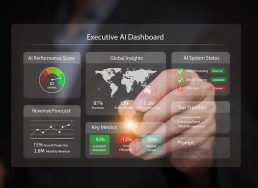
The AI Executive Review gives leadership teams a structured, independent assessment of whether their AI ambitions, investments and organisational capabilities are aligned with measurable business outcomes. It covers strategic alignment, governance and accountability, operating models, organisational readiness, adoption, delivery capability and the mechanisms through which benefits will be realised. The result is an evidence-based view of the current position, key risks and opportunities, the gaps between AI ambition and organisational capability, and a prioritised roadmap for action.
Suzanne Coles
Suzanne Coles is a Partner at Curzon Consulting, where she leads the firm’s work helping organisations turn AI potential into business performance.
She brings more than 25 years’ experience across strategy, transformation and innovation, particularly in complex and highly regulated sectors.
An Associate Fellow at Newnham College, Cambridge, she combines this industry experience with an academic background spanning applied neuroscience and AI, including postgraduate study at King’s College London and MIT.